Forgotten Texas Jewels: Ratcliff Lake
Copyright March 2010, All Rights Reserved
NOTE: A dozen or so years ago I wrote content for a website called “Constant Comment.” It was a freelance site where writers could submit works and hope for a little bit of pay. This is one of those pieces. Unfortunately, most of my Constant Content pieces are gone. Yahoo bought Constant Comment out and a couple of years later shut it all down and deleted all the works. Bummer.
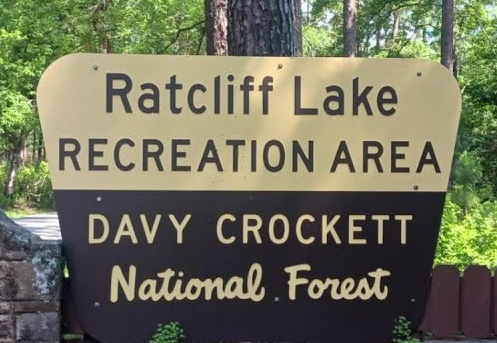 Ratcliff Lake, the quiet alternative to a frantic outdoor vacation.
Gentle splashes of water against a grassy bank, bird calls echo over the lake, the world a million miles away. This is Ratcliff Lake. A crane flies low over the waves which glisten in the sunlight. Ratcliff Lake Recreational Area in East Texas is the perfect place to spend a few lazy days wetting a hook, staring at the clouds, or just dreaming.
Born as a water storage facility for the Central Coal and Coke Company Sawmill around 1900, Ratcliff Lake has had a long history. When timber was king the city of Ratcliff was a busy logging town, one of the largest in East Texas. But over-cutting and no forest management quickly ended the timber boom. Ratcliff started dwindling, folks moved east to Lufkin, the mill shut down. The dam was breached so the land could be used for farming. The Federal Government took up ownership of thousands of acres of wasteland that had been lush old growth forest, including the site of the defunct mill and mill pond. In the 1930’s the Civilian Conservation Corp (CCC) rebuilt the dam, planted trees, and built facilities to create Ratcliff Lake Recreation Area.
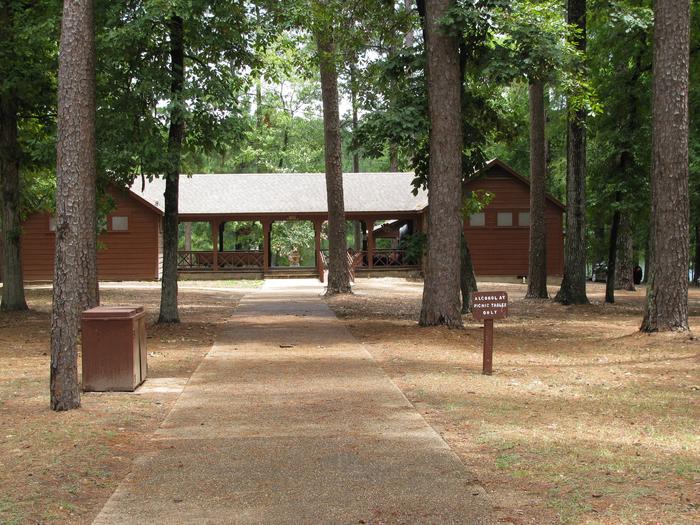
Not so much has changed over the years at Ratcliff Lake. It’s had lean times and busy, suffered neglect on rare occasion, but mostly the lake’s facilities and infrastructure has aged incredibly well. The original CCC bathhouse and group pavilion is still in use though both have undergone careful renovations in recent times. There’ve been upgrades and improvements to the roadways, trails and other facilities too but the old charm and beauty remains virtually undisturbed.
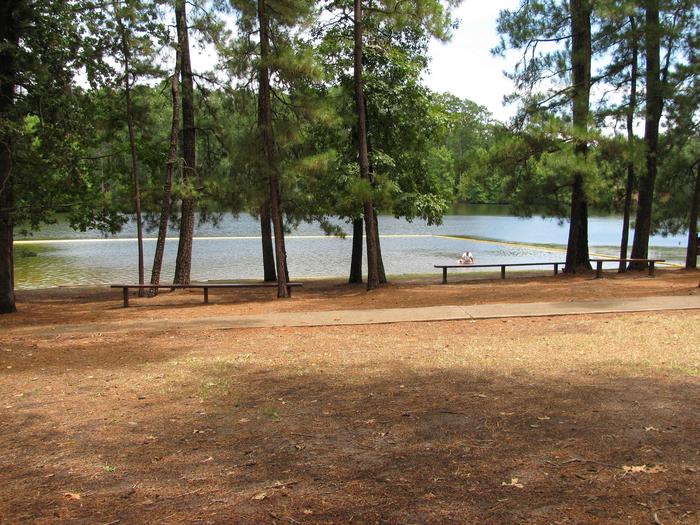
Ratcliff was a very popular destination in the sixties and seventies. Several generations of East Texas families share memories of happy times at the lake. Swimming, fishing, camping and boating kept folks busy. The swimming area was better maintained then than it is now, with fresh sand for tiny toes. In the past decade moss has crept past the yellow floaters marking off the swimming area. It’s been a challenge to keep it back. Swimming is still very popular but the moss does put some would-be swimmers off a bit. Of course swimming in a lake always means keeping a wary eye out for critters and a toe nibbled by a perch ever once in a while.
 Camping has always been good, especially for those who like tents and camp fires. Those with finer sensibilities have chosen RV hookups with electric and water close by. Lakeside Loop has the most tent sites but there are a few others . Loblolly Loop where a couple dozen tent sites are located was closed in 2009 was for renovations. Forest Service officials say the loop is likely to open soon and with much better facilities than it had before.
Ratcliff is a perennial favorite for scout troops and other groups who use the group camping area at the end of the winding park road. There’s a very large area for tents, a restroom with cold water showers, group pavilion, and a playground there, too.
In the seventies the Forest Service put more effort into creating hiking trails. There’s been continued development on them. Today hiking is a very big part of Ratcliff with several well maintained trails winding through many miles of national forest. Trees planed by the CCC have grown very big and tall. They provide a large canopy for shade on a hot Texas summer day. There are still plenty of timber around the lake too, though the occasional storm and a few pine beetles have claimed their share of trees over the years. The Forest Service conducts controlled burns to keep the brush and fire danger down. The fires enrich the soil so native plants bounce back quickly and make all the trails entirely worth the effort of traversing. Many of the trails have bridges and boardwalks in low-lying areas. Some have wildlife viewing stands. Wildlife is abundant. There’s small animals and deer in the woods and beavers sneaking around on the lake making splashes and nibbling on trees near the water.
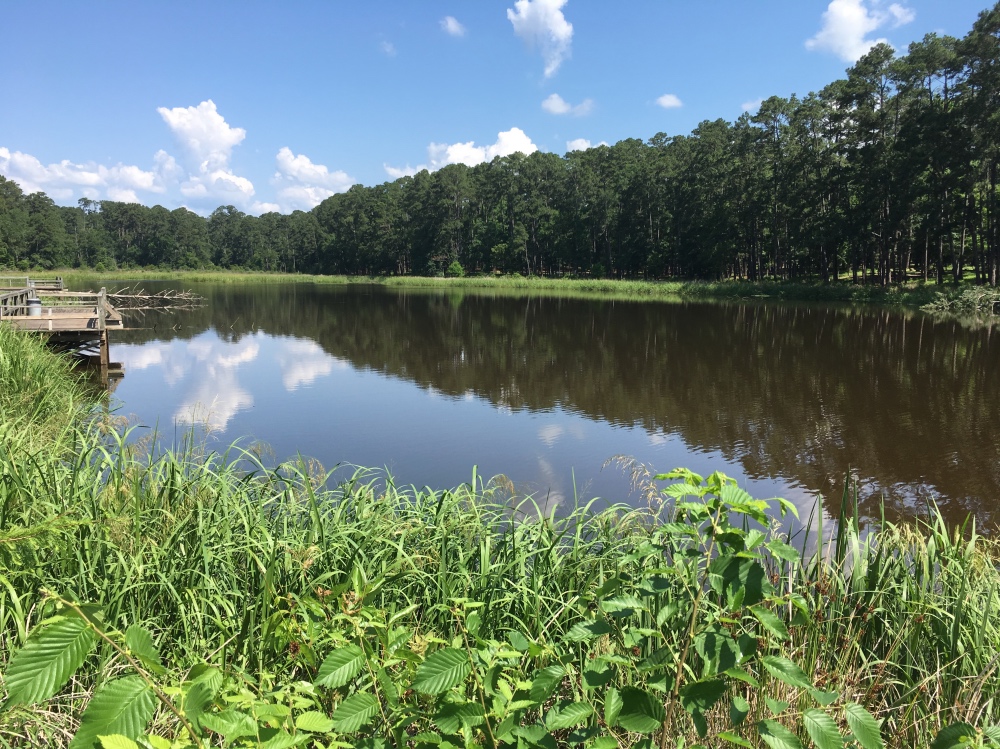 Fishing, of course, is what many folks do at Ratcliff. It’s not bad these days with a lake stocked with bass, perch and catfish. There were times when fishing was skimpy. Aquatic plants have wreaked havoc over the years. Lilly pads and moss invaded several times blocking access to the water. At least once in the lake’s history an attempt at a chemical solution to the moss problem led to a terrible fish kill but the lake has recovered fully from that dreadful mistake. Anglers in flat bottoms, canoes, or kayaks are often seen drifting along the bank plugging away and snaring some nice sized fish.
Ratcliff has limits on catches. Fishermen need to check at the entrance for information. The Forest Service has worked hard to make sure there’s a healthy fish population so they’ve put size and catch limits on catfish and bass. Many bass fishermen practice catch and release so to them limits isn’t much of a problem. For the rest the limits still allow for a good mess of fried fish, a meal fit for a king when cooked over a camp fire and accompanied with pan fried ‘taters, a can of beans and fried corn bread to round things out. It’s a meal maybe not so good for the heart but wonderful for the soul.
One of the reasons Ratcliff remains a nice, quiet place is the restriction on motor boats. It’s simple, no gasoline motors allowed. Electric motors are permitted. Canoes, flat bottom boats and paddle boats are available for rent much of the year. There’s a boat dock for those who bring their own. Adventurous boaters can slip back into the creeks that feed Ratcliff where the trees hang over the water and turtles splash close by. It’ll seem like a trip into ancient jungle streams. Sun perch and catfish are sometimes biting pretty well in the backwaters too.
 One of the nicest things about Ratcliff are the prices for entry and use. They’re far below what some recreation areas charge, well within a family budget. Day use and entry is only a few dollars per vehicle. Camp sites are all under twenty bucks, including RV hookups. Boat rentals are a bit higher but no more so than at most other recreational areas. Rentals of boats and swimming floats, as well as the store/cafe, are provided by a local vendor. Bait for hooks and food for the family and camping essentials are available during the season when the store is open. The vendor opens a few days a week starting in March, open every day in the summer, and remains open at least weekends usually into October.
The best time to visit Ratcliff is actually in the off season. There are far fewer people and much less noise. Winter months at Ratcliff are very quiet. Of course East Texas winters can be a bit cool. Swimming isn’t much of an option then. Boating and fishing, though, are great ideas. Bring the boat, the vendor is not open for rentals. Even better, wrap up and settle into a camp recliner and just enjoy the solitude and beauty of the lake.
Some East Texans have made Ratcliff camping a traditional event in summer. Camp sites are harder to come by, especially with Loblolly out of commission for a while. RV slots are often more available though they are all located a distance from the water. Plans are in the works to convert some of the tent sites into RV spots according to officials at the local Forest Service headquarters. Nobody knows when it will happen, however.
The one time to avoid Ratcliff is the beginning of deer season. Every year the park is invaded with hunters in cammo suits ready to bag the big buck in nearby national forests. They’re always up early, a bit loud sometimes, and on occasion given to dressing their kill in the evening, not a pretty sight for vegetarians or wildlife lovers.
Whatever else visitors to Ratcliff might find to do, from fishing to hiking or swimming, they should explore the old mill area just a bit. The Forest Service has informational signs with photos erected near the old sawmill foundations. One doesn’t want to bore the kids too much but still it’s a grand opportunity to learn a smidgen about Texas’ past and have a little fun at the same time.
Once travel to the area was by wagon over bumpy, rutted roads but Ratcliff is easy enough to reach from Lufkin, Nacogdoches or Crockett in around half an hour by car these days. The lake is on State Highway 7 fifteen miles east of Crockett, tucked away in the Davy Crockett National Forest. The nearest supermarkets are in Crockett. A little grocery just down the road east of the entrance does provide basic needs. The store is one of the last remnants of the city of Ratcliff.
Plan on a bit of fun, a bit of fishing, a lot of relaxation. Don’t count on texting or sending friends quick pics via cell phone however, because cell service is almost non-existent. Tuck those phones away and break out the lounge chairs. It’s time for relaxation and quit. Can’t get any better than that! Ratcliff Lake Recreation Area: it’s a good place to visit but don’t tell anybody or the quiet will be gone in a hurry.