.
.
The God-Damned School of Truck Driving
Originally written October 2, 2000
I was leaving the Foundry, having delivered a load of sand. I was following a dry van with the name of my former boss at Oakridge on its side. I thought the driver looked familiar from my days at Oakridge. I knew several drivers had gone with J.D. so I hailed the driver on the C.B.
“How ‘bout that J.D. Driver?”
“Come on.”
“Did you used to work for Oakridge?”
“Ten years, quit about fourteen months ago.”
“Thought I’d seen you around when I was there. I was trained by Max. ’93.”
“The old guy, Max Saxon?”
“Ten four.”
“He died a couple years ago. Cancer.”
I didn’t know what to say. The J.D. Driver turned one way, I went another.
Training with Max…
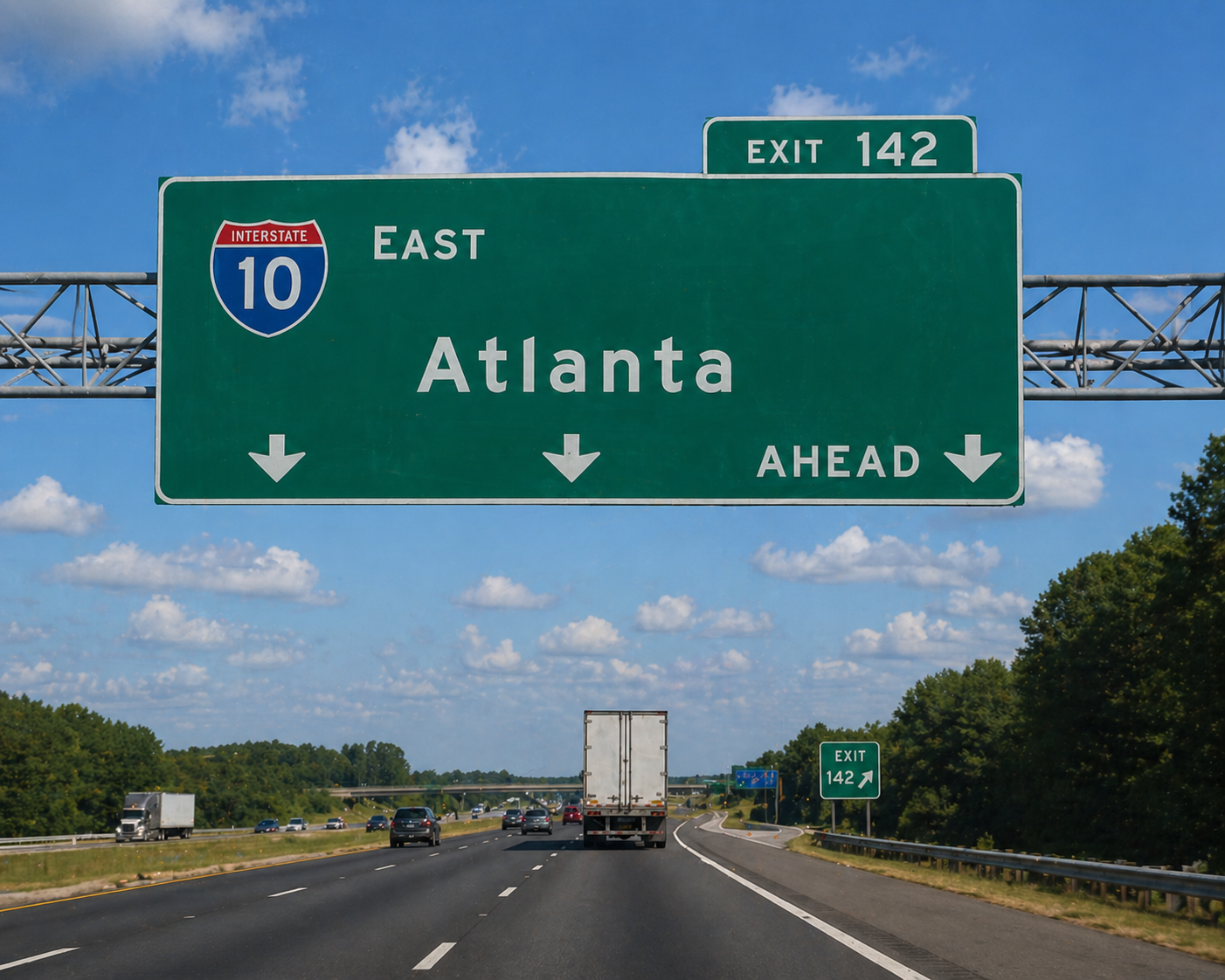
 Thursday, March 18, 1993. Four PM. Max and I headed for Atlanta, Georgia with a load of paper. Max’s truck, unit 6491, was one of the newest in the fleet. He was a senior driver and was given the best. He was also picky as hell about that truck. I think he worried every minute when a student sat behind the wheel. I took over driving after we stopped to eat in Lake Charles, Louisiana, ten thirty that night. My first time to drive his truck and third day on the job. Max rode a while and then crawled in the sleeper. I pointed his nice, new International hood up I-10, Eastbound.
When I rolled into a tiny truck stop along I-65 a few hours later Max was awake. I know because he came barreling out of the sleeper like a bull. “You hit that God Damned truck!” I hadn’t but he was sure I had. He thought I had made a turn too short around the end of a flatbed hauling rebar. His language and yelling was my rude introduction to what I’ve come to think of as the “God Damned school of truck driving.” Max was the number one instructor. He flew out of the cab and went back to inspect damage that didn’t exist. He grumbled when he returned and never apologized.
I was a bit shaken by Max’s yelling and a little angry too. It was four AM, Friday. We were in Stockton, Alabama, just north of Mobile. I was tired and nervous and he wasn’t making things better. Max took over again, grumbling about my almost tearing up the trailer, the cost of rebar loads, and whatever else he could grumble about. I let him and crawled in the sleeper.
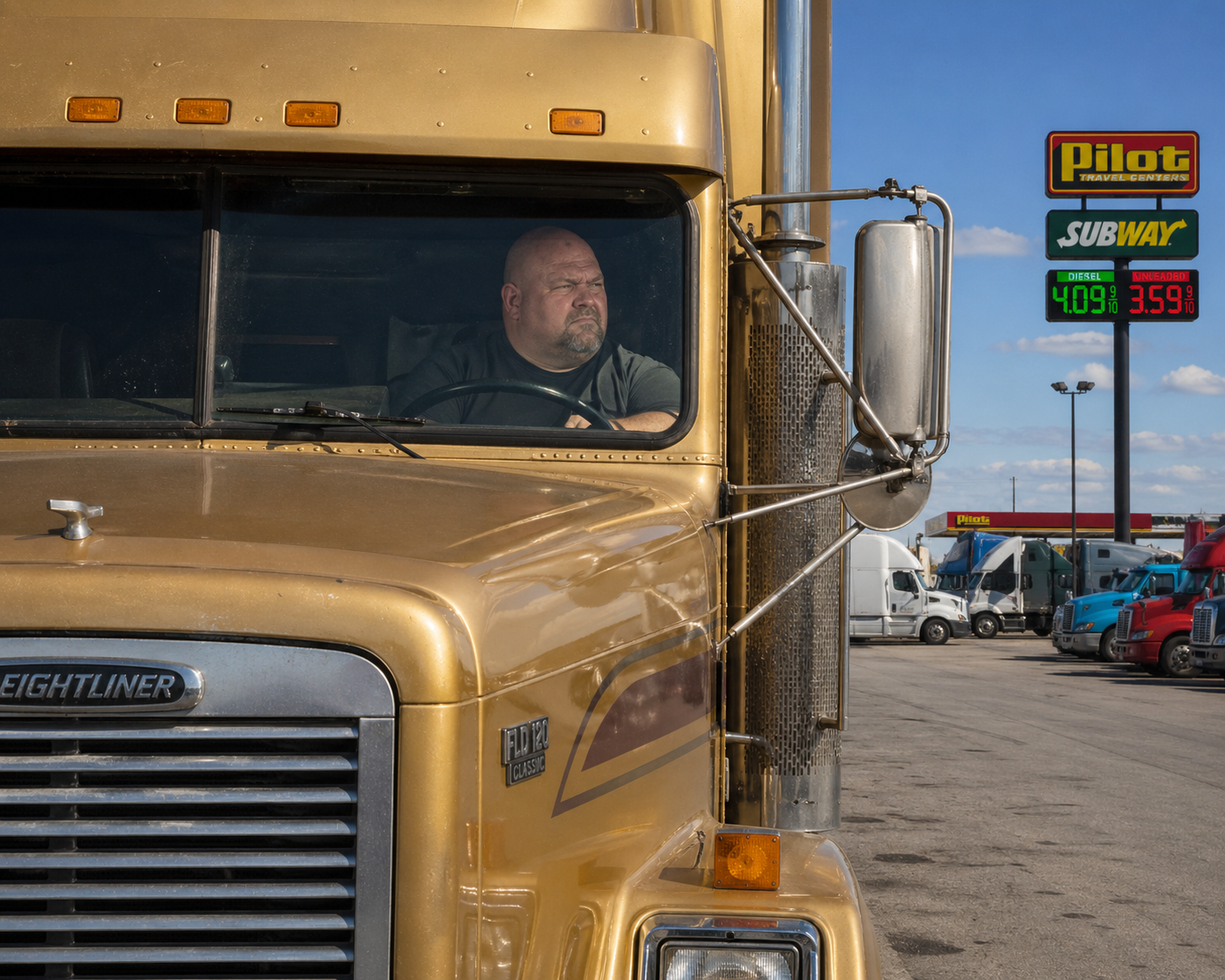
Max was a big man, maybe five ten, well over 250 pounds, mostly bald, with a round head and round features on his round face to match his round middle. He could look fierce and mean and would not look out of place on the hood of a Mack. He kept a cooler beside the driver seat in his truck from which he pulled an un-ending stream of junk food. Four things Max did very well: he cursed, he ate, he smoked, and he drove. After a while his cursing became comical instead of intimidating. His eating was a habit that kept him “healthy.” His driving was, of course, impeccable. He was a good driver, and a respectful one. He obeyed the rules of the road and didn’t try to intimidate four wheelers the way some drivers do. His smoking was something else altogether.
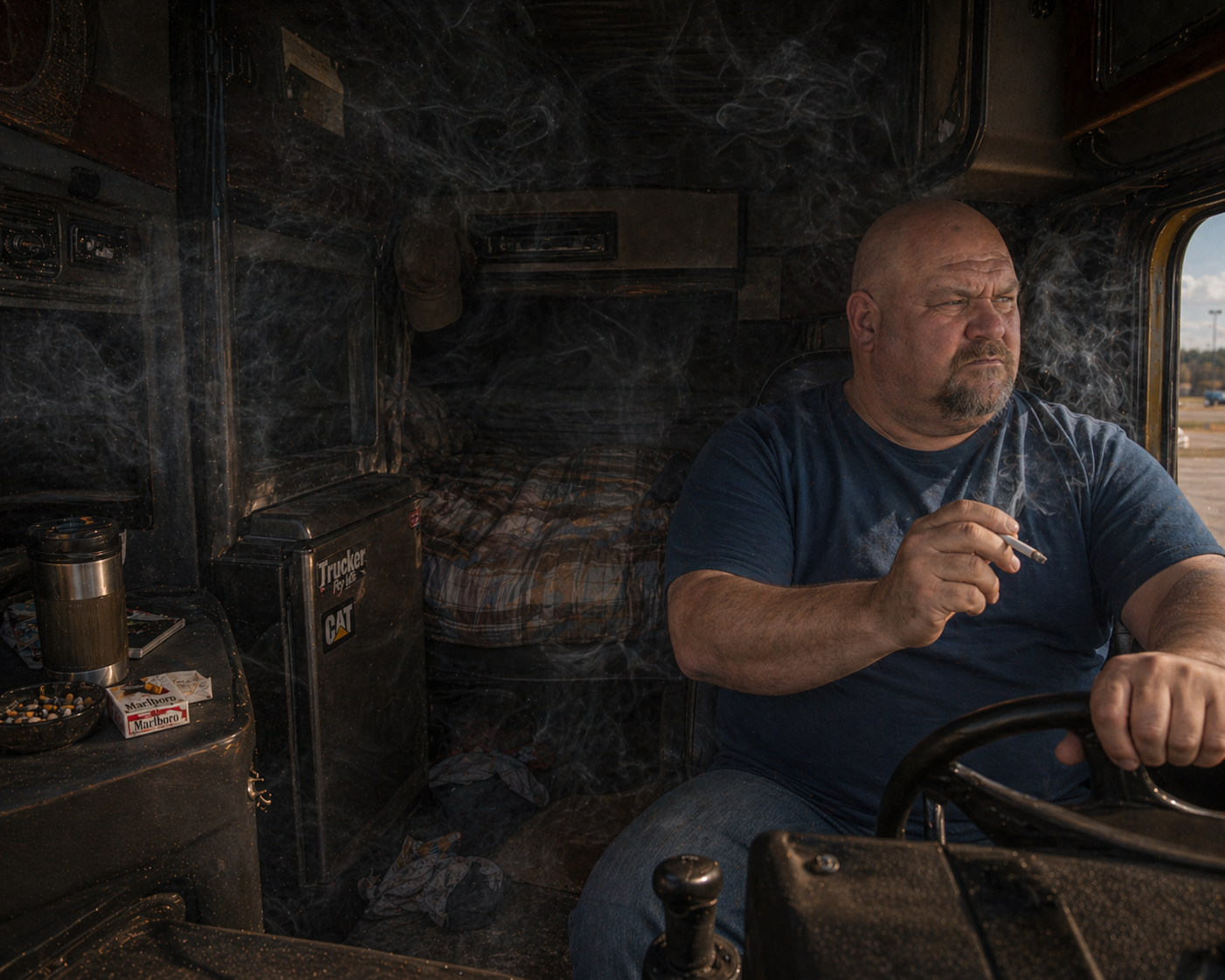 I do not smoke. Never have, except for a few months in the military. I love to breathe. In Max’s truck breathing was not an easy thing to do. He lit his next cigarette from his last. The windows stayed up and the a/c on. You could sit in the bunk of Max’s sleeper and you would find it almost impossible to see out the windshield for the smoke. And I do not exaggerate. Sleeping was the hardest thing for me to do. Only a vinyl curtain separated the cab from the sleeper and I worked very hard at making sure that curtain was as tightly closed as possible using the magnetic strips in its edges. I would pile everything in the bunk against the side of the sleeper and lie, propped up, with my face in the tiny air vent. Not too many days passed until I was as grumpy and ill mannered as Max from lack of sleep.
Friday, March 19, 1:30 PM. We unloaded in a suburb of Atlanta, Georgia. Then I slid under the wheel again for a short run over to Alabama.
 Friday, March 19, 6:30 PM. In one respect driving is like the military: hurry up and wait. Shippers and receivers want drivers at their place on time and do not care if they have to sit for hours on end. We could not load in that little town of Sylacauga, Alabama, for hours. Max told me to get some sleep so I piled into the bunk and he drifted off somewhere to find something to do. There was nothing to do. He mostly sat, until midnight, when he took the bunk and I just sat. Solo drivers get caught up on their sleep with layovers like this one but trainer teams like us just got more fatigued.
Saturday, March 20, 4:00 AM. Loaded, finally. Max took the wheel saying something about some bad hills. We had breakfast in Mobile, 9:30 AM Saturday. I took the wheel. We stopped for lunch in Grosse Tete, Louisiana, at 2:00 PM. I found my way into the Sheldon drop yard at 8:30 PM.
Saturday, March 20, 8:30 PM. We dropped our trailer and picked up another one. By 9:00 PM I had piled into the sleeper and Max had pointed his hood towards Altanta, Georgia, again.
Sometimes we talked instead of one or the other of us spending time in the sleeper. Max told me about his background. It was quite impressive. He had worked as a straw boss in the far east for an oil company. He had done a lot of things, worked hard, and then got screwed in a layoff, as I remember it. His first jobs were trucking and his last job was driving. He tried his hand at being an owner-operator and went bust. His hands bore the scars of a lifetime of hard work. He had dozens and dozens of stories but all of them are lost to history now. What a tale they would tell. It wasn’t very long that I learned his emotions bore scars too, from lost friendships, dishonest employers, troubled marriages, broken dreams. He had a daughter who lived near Dallas to whom he almost never spoke and a wife at home in Frankston, Texas, not his first, who rode with him when he didn’t have a student. Max’s life had been hard and after I got used to his manner I came to feel a bit sad for him. And I liked him. In spite of his yelling and cursing, most often focused on me.
My old log book shows Max drove from Sheldon to Vinton, Louisiana, where we stopped to eat, and then on to Anderson, Alabama. Nothing logged other than a tire check for the eight hours from Vinton, One AM, to Escataupa, Mississippi, Nine AM, where we stopped to eat again. In Anderson I took the wheel for the last leg into Atlanta. Max logged well over ten hours driving time but we’ll not tell DOT. Not much they could do to him now, anyway.
Sunday, March 21, 5:30 PM. Atlanta, Georgia. Layover. Had one or the other of us been solo we would have simply parked in a truck stop and twiddled our thumbs until Monday morning but since there wasn’t room for both of us in the sleeper we wrangled a motel room from our dispatcher. Just one, though, so we woke each other up snoring through the night as we shared a single room with twin beds. At least the air wasn’t completely full of smoke.
Monday, March 22, 7:30 AM. “YOU ARE GOING TO HIT THAT God DAMNED TELEPHONE POLE!” Nothing about Max was subtle. I was at the corner of two four-lane streets, each full of rush-hour traffic. And I was making a turn to the right just a little too sharp. I locked the rig down in the middle of the street.
“What do I do now?” We were a rock in the stream. Four-wheelers surrounded us like a swarm of bees.
“Back it up.”
“Back it up?” I could not see behind me, of course, since the trailer was on my blind side.
“But…”
“Back it up!”
“Fine!” There was another thing Max was good at. Making me angry. I have never liked anyone to yell at me and his method of teaching, with a yell and a “God Damned” this or that, would flip my switch. So I was less worried about my situation in the middle of that street than I was angry at Max for yelling. I pulled the nine-speed into reverse, eased the clutch and started to roll backwards. I figured if there were cars in the way they would have to move.
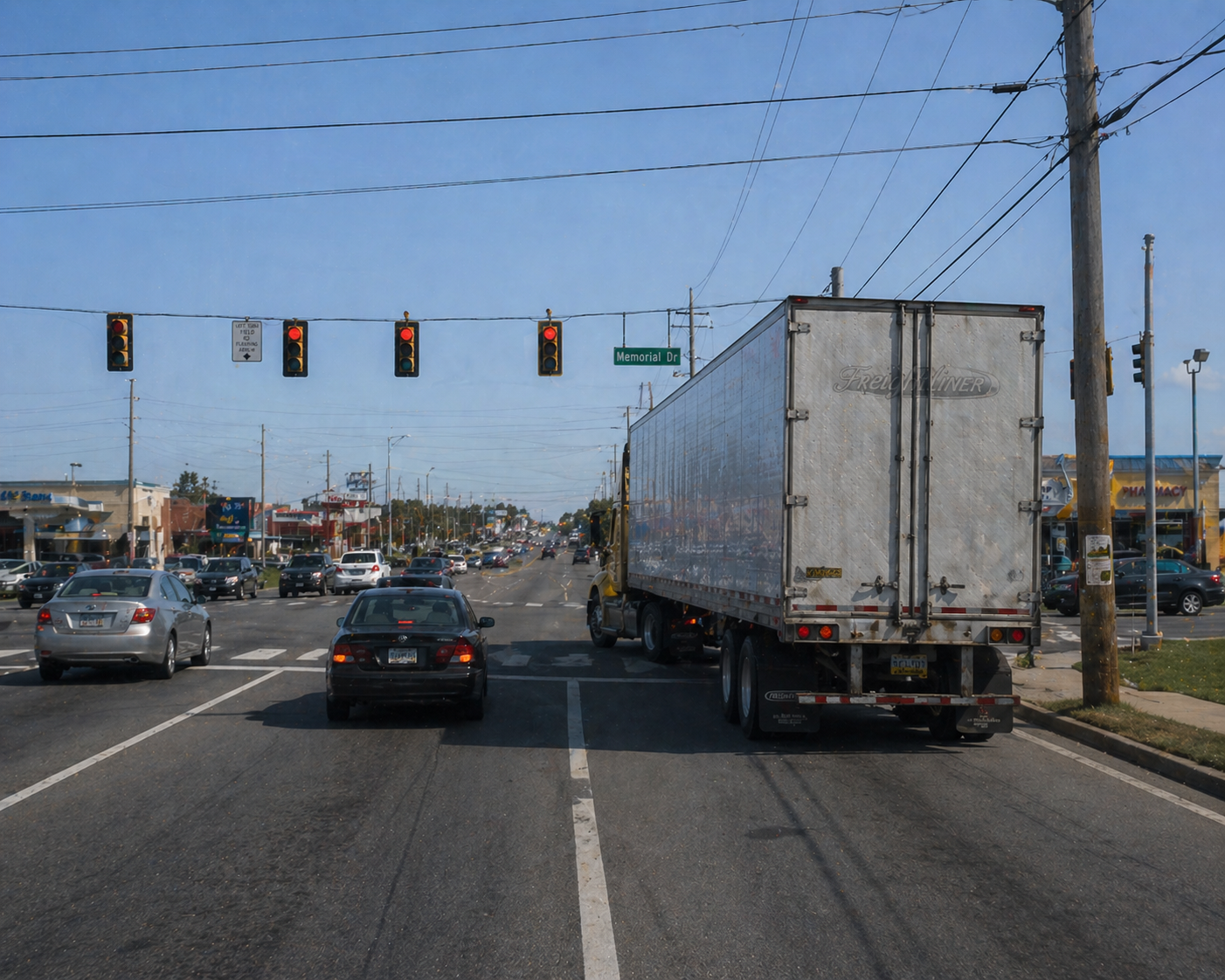 When I was back enough to make the swing Max pointed to the traffic in the cross street. “Make them move,” he grumbled. “You have to make them move.” I swung the long tractor out into the intersection and around as far as I could go until I sat in the turning lane of the cross street. Eventually the cars in the way got the right idea and moved. I made the turn and we went on to the warehouse. Max’s methods were intimidating but effective. I doubt I have ever made a right turn that I didn’t remember that little event. Even in a car.
We had a load of trash bags which were going to a small warehouse manned by a single Vietnamese immigrant who spoke poor English. The lot was too small for big trucks. And, of course, the lot was surrounded by a lovely new landscape job. I managed to put a nice rut along the side of the cement in that new landscaping on my first attempt to hit the dock we were told to use. The little oriental guy was not happy about that. It was clear to me, though, that Max’s long tractor was not going to turn the way it had to turn to bump the dock the little guy wanted bumped because of the short lot and a retaining wall that prevented our jacking the trailer up against the dock. I tried a few times and it looked like I was going to get into the grass again so Max took over, grumbling and complaining.
The only reason the warehouse man wanted us to bump the left dock and not the right, both of which opened into the same cavernous space, was because he didn’t want to have to move his portable ramp. But the retaining wall and the length of Max’s truck prevented Max from hitting that dock. Max would curse. “God Damned Chineeee!” Anyone who looked oriental was Chinese to Max. “God Damned retaining wall!” There’d be a grumble, the huge tractor would jump and sway as Max threw it from one gear to another. “God Damned Chineee! God Damned wall!” All the while the Vietnamese man stood on the dock chirping in broken English, “It go heeyah, heeyah, no other drivah have pro’lem, heeyah!” Max was purple and steaming, the Vietnamese man was jumping and yelling, and I stood behind the warehouse door laughing so hard I could not stand up.
When I caught my breath I went to the man and told him that Max’s truck would never make that turn without getting into the landscaping. “Why can’t we just hit this dock?” I pointed to the right dock.
“Fine,” the man frowned, “go ahead.” Then he grumbled, “All other drivers use this dock.” His implication was that we were not good drivers but the point wasn’t worth arguing. I told Max the man said hit the other dock and in a few minutes the little guy was on his forklift unloading our truck.
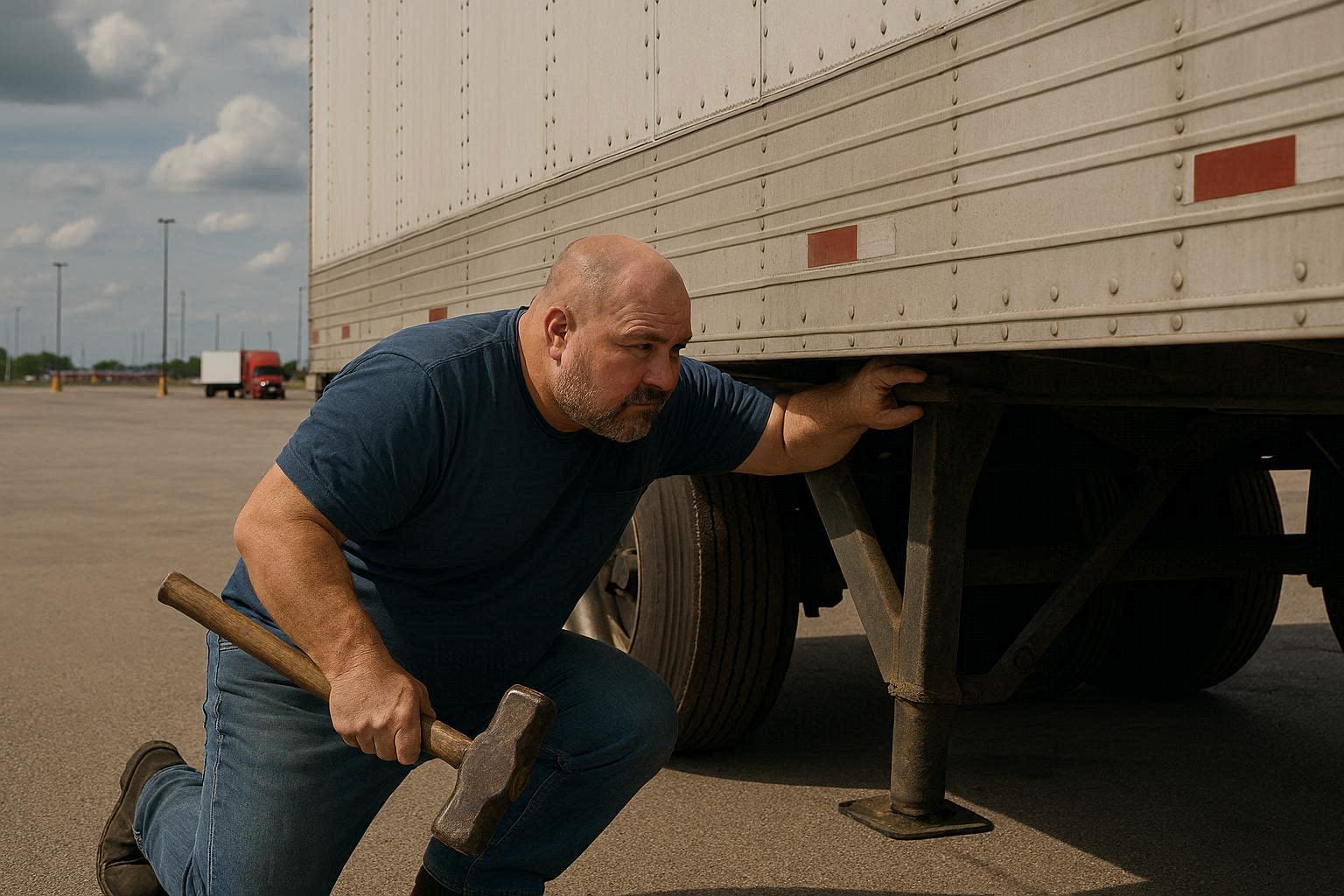 Monday, March 22, 6:00 PM. We sat in Decatur, Georgia for over nine hours before I took the wheel again, this time with a load of sauce bound for Dallas, Texas. An hour later we stopped at Villa Rica, Georgia, for a quick bite to eat and to check our weight. We were below gross but our trailer was heavy. No problem, Max said, we’ll just slide our trailer tandems. But they would not budge. Max showed me the release pen and pulled it. He had me try to move the truck while he watched. Nothing moved. He got in the truck and slammed it back and forth. Nothing moved. He was turning red. He disappeared and when he re-appeared he was carrying the largest sledge hammer I’d ever seen which he wielded like a tack hammer, in one hand. He pounded on the pins, the slide, the trailer, anything else that might keep the thing from moving. He was a darker red now, filling the air with expletives about the trailer, the company, and anything in general. I just stood back out of the swing of that hammer.
By the time he gave up on the idea I was sure every bottle of sauce in that trailer was broken. The trailer was sealed, though, so I couldn’t look. Neither could we get inside and shift the load around. So he took the hammer back and we headed east hoping the scales would all be closed. We lucked out. Max did quite well holding his temper a few days later when we were told nonchalantly by our boss that all the trailer slides had been welded “to keep them from being torn up.” I did equally well holding back a chuckle as I remembered Max’s battle with that trailer.
Tuesday, March 23, 1:00 PM. Mesquite, Texas. I’d taken the wheel at a truck stop in Vinton, Mississippi at 4:45 AM and drove the rest of the trip down Interstate 20, through Louisiana and into Texas. We had slowed down just outside of Shreveport at the state line because a cattle truck had turned over and cows had the run of the interstate. When we stopped in Tyler for a sandwich around 11:00 AM I thought about how close I was to my wife and home; just thirty miles. The loneliness that is a constant with over the road drivers was setting in. I swallowed it and drove on to the Metroplex.
My wife worked in Jacksonville, Texas at the time, managing a Burger King, and we lived near there. Oakridge’s terminal was in Lufkin, our home town. I was rather happy when our dispatcher told us to head home. Our route took us down U.S. 175 which runs to Jacksonville from Dallas then dead-ends into U.S. 69. We passed near Max’s home but he didn’t stop though I tried to get him to. We did stop in Jacksonville where I introduced Max to my wife, showed her the truck and had a free Burger King meal. Then I said goodbye rather reluctantly and we went on to Lufkin. My log book shows sleeper time from Mesquite to Lufkin but I was not asleep. I was riding shotgun enjoying every little bit of scenery on the way to the terminal.
Tuesday, March 22, 7:30 PM. Home again. In four days we’d driven several thousand miles, Lufkin to Houston to Atlanta, back to Houston and back to Atlanta and then to the Dallas/Fort Worth Metroplex. We’d had two layovers and I had well over 30 hours driving logged. Max had nearly twice that. It was an introduction to the weeks and months to come.
From Lufkin we headed to Houston again, picked up a load of pulp and brought it back, laid over a few hours at the terminal and then took the pulp on to Grenada, Mississippi, dropped the load and came back with an empty trailer. We made other runs together. Max would stop and buy lottery tickets in every state we passed through that had a lottery. His wife kept up with the numbers. In what I discovered was a ritual with him, at every truckstop he called his wife, gave her his new numbers, reviewed past drawings, and planned his next stops to buy more tickets. He would point at a passing motor home and say, “some day I’m going to buy one of those and see this country.” He dreamed of stopping and spending a day or two at all the sites along the highway we as drivers could only look at as we passed by.
Max fretted over how he’d missed so much of his daughter’s life. He talked about his grandkids. He talked about his life on the road and in the far east. Through his eyes I saw what truck driving was really all about. It was about long runs and lonely days and sleepless nights. It was about missing a family who became strangers after a few years of being gone twenty eight days out of thirty. It was dealing with places cold so raw and cruel that the diesel in your tanks turned to jelly and coming upon mangled vehicles where bodies of passengers littered the highway. It was about long lay-overs and then racing against the clock to get the load delivered faster than humanly—and legally—possible.
As he drove long stretches of highway Max would fall silent, almost immobile. Who knows what went on in his mind. There was no question he loved driving. It was in his blood. Max was a company man, a man who followed orders and took loads and delivered them, pushing himself to the limit. He griped and complained plenty but it was all just steam out of an overflow pipe.
Max could punch my button. I don’t know how many times one or the other of us sat fuming, too mad to talk. Once while rolling into a truck stop on Interstate 20 I scratched a gear down shifting and he let me have it, cursing loudly and saying something about ripping the transmission out. I remember giving him a few choice words of my own and sat in the truck while he ate a meal in the truck stop diner. Maybe we were too much alike. I asked myself why I took his abuse. But I knew the answer. It was because, like Max, I have diesel in my veins. Let Max disappear behind the sleeper curtain and give me a stretch of highway and I was happy. There was just something about the rumble of the engine beneath my feet, the roar of the wind, the crackle of a radio loosing a station and the weird glow of the instruments at three AM. Something undefinable kept me in that stinking truck and enduring Max’s yelling.
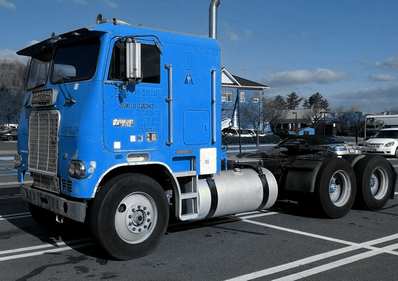 After about three weeks I decided I’d had enough of Max’s attitude. I told the dispatcher to find me another trainer, give me a truck, or I’d just go home. Looking back I’m sure it hurt Max when I did that and I now regret my actions. Those three weeks were not a lot of fun but after a while we had come to tolerate each other and developed a mutual respect. He eventually figured out that I had some aptitude for driving a truck and I could see that whatever else he was Max was an excellent driver. I learned more in those three weeks with Max than I think I could have learned in six months with anyone else. By the time I took my stuff out of his truck there was more of Max in me than I’d have admitted. The only habit I didn’t pick up of his was his smoking.
“You lasted longer than most do,” the dispatcher told me. “We’ll see what we can do.” What he did was stick me with another trainer who was the photo-negative opposite of Max. I ran with this new trainer, Dan, for a couple more weeks in his old International cabover and then got a carbon copy of that cabover for myself.
The last time I ever spent with Max was over a meal in Mississippi. I was still with Dan and he and I, along with Max and a dozen other drivers were making a special run from Natchez to Grenada, carrying pulp from a recycle plant to the Grenada paper mill where we also hauled pulp to from Texas. The run was about four hours and on each end we wound up with layovers. On one of those layovers in Natchez, Dan and I, and Max, found ourselves invited to lunch by the company safety officer. It was an interesting situation for me.
The first thing Max had told me the day I got in his truck was “use that clutch!” The first thing Dan had told me was, “forget the clutch, speed shift!” Max was insanely insistent on my double-clutching every gear and went ballistic if I scratched “his transmission.” And the first thing Dan said as we all sat down at Shoney’s was “Ted’s not bad after I got him to quit using that clutch so much.” I looked for Max’s usual explosive demeanor to erupt but it didn’t. It wasn’t there. In its place was a calm face and a slight grin. Instead of ranting about tearing up transmissions he simply turned to Dan and told him the story I knew by heart, the one about Max’s trip to a transmission plant where he was shown how speed-shifting can damage a transmission.
That day I walked away with a different attitude towards Max. He was loud and crude and downright abusive to a trainee but I understood, finally, that it was mostly for the benefit of his student. He knew what driving was like and especially what kind of challenges I’d face driving for Oakridge. The lessons were all painful and pushed my temper to the limit since I can be just as hotheaded as Max, but I learned. I learned a lot, not just about driving but about being on the road, dealing with dispatchers who cared more for the load than the driver, and about life.
Max seemed to shrug off my dumping him as a trainer and never brought it up except to joke about his making me angry during the course of our meal at Shoneys. I came to consider him a friend and any time I ran across him in the terminal at Oakridge I’d rely on his advice.
I drove for Oakridge about six months, until my two-million-mile truck dumped its drive shaft on a road in Shreveport. I’d been on a pulp run up to Grenada and back. This was the only trip my wife ever made with me. The truck broke down at three AM, miles from anything. My wife needed to pee so I fashioned a temporary squatter for her. When five o’clock came I walked over to a construction site a little ways from the truck. The construction shack had a phone and the men there loaned it to me. This was before the days of cell phones and quick help.
The company decided to have the truck fixed where it was instead of sending their tow truck for it. My wife and I were delayed about ten hours, waiting on mechanics to fix the truck. As we waited I called my brother to come up from Lufkin. He came and we all had dinner at a truck stop up the Interstate.
After we ate my brother took me back to the truck. I unloaded everything that belonged to me. I’d had enough. When the truck was fixed my wife left with my brother. I drove the truck back to the yard and dropped the keys on the dispatcher’s desk. I told him I was done with that truck. He said he only had another one just like it. I said fine, see you around, and went home.
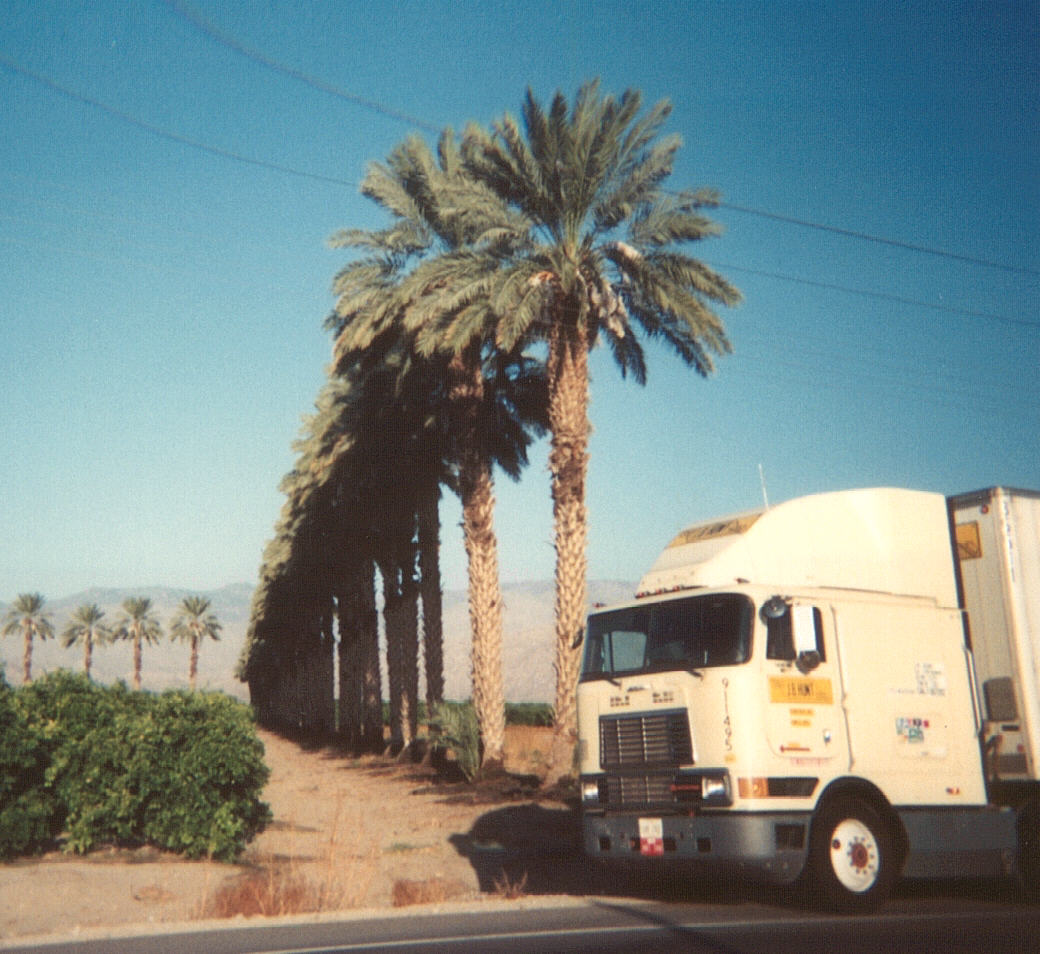 A few weeks later I went through orientation for J.B. Hunt. I drove a much nicer cabover all across the country, from Houston to Washington D.C., Maryland to Illinois, on to California and back home. I really enjoyed working for Hunt. But sadly enough I fell out of that truck in Greenville, Georgia and broke my leg. My driving career ended for seven years.
For a year or two I’d see Max coming and going in his Oakridge truck and then I lost track of him. But I never forgot him and often thought about him, wondering if he was still running the roads for Oakridge or if he finally had that motor home. It saddens me greatly to know he never made it to that motor home. If I hadn’t broken my leg it’s a good bet I’d have turned into the same kind of guy Max was and put as many miles on the road as he did.